
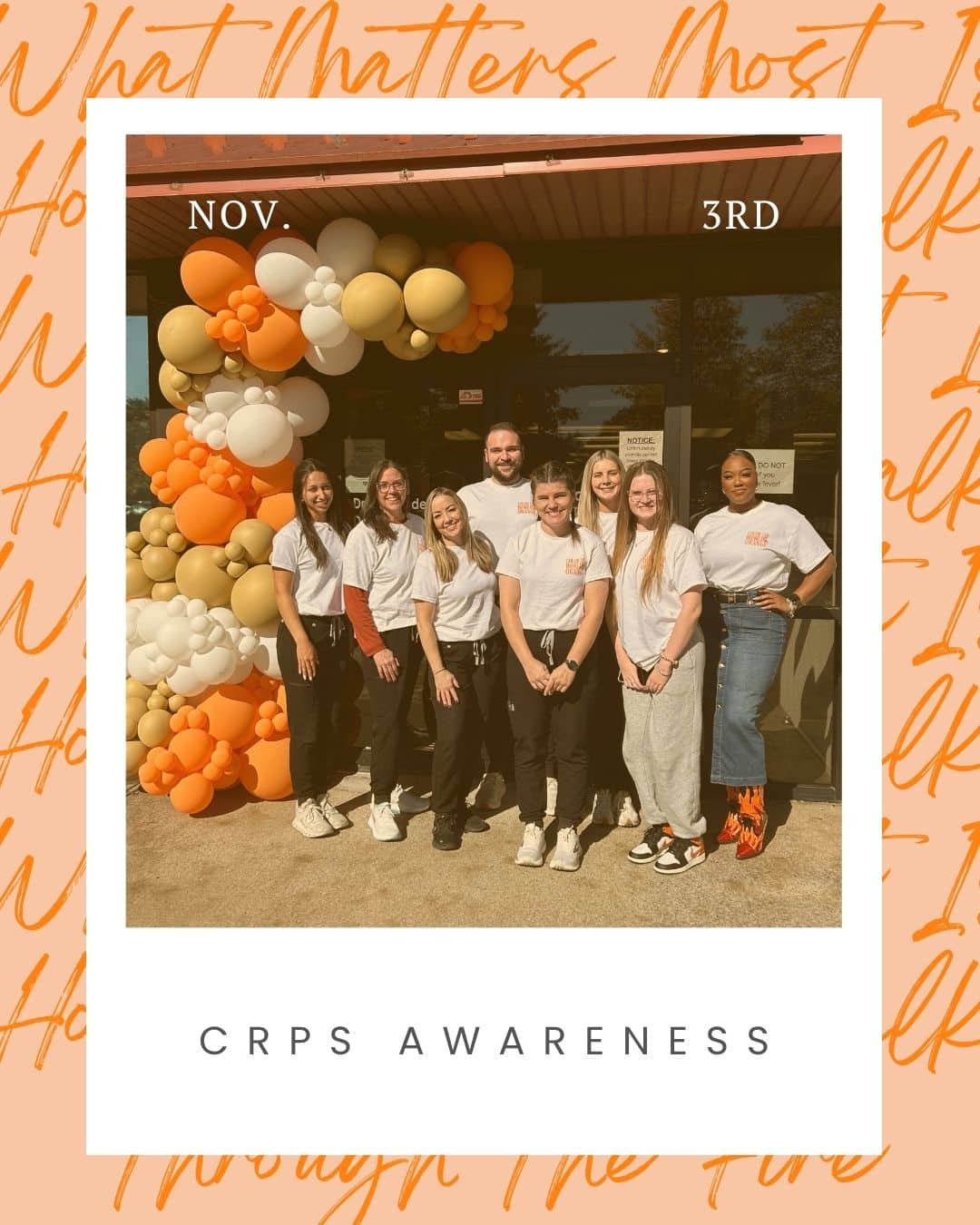
Complex regional pain syndrome (CRPS) is a neurological condition that causes pain and other symptoms in one part of the body, usually an arm, leg, hand or foot, according to Cleveland Clinic. The pain often outsizes the original injury, and the symptoms are real. Color the World Orange Day uses orange to help people understand CRPS.
If you live with CRPS, you probably know all of this already. If you love someone who does, or you were diagnosed recently and are still picking up the words, you’re the person we had in mind.
What is Color the World Orange Day?
Orange is the color of awareness and support for people living with it.
When a condition is invisible to most people, a shared color gives them something to point to. An orange shirt, a porch light or a profile photo says "I know this exists, and I believe the people who live with it." That belief matters more than it sounds, because a condition people doubt is a condition people carry alone.
What is complex regional pain syndrome?
CRPS is a neurological condition that causes pain and other symptoms in one part of the body, most often an arm, leg, hand or foot. According to Cleveland Clinic, it affects about 200,000 people every year in the United States. It usually begins after an injury or surgery.
The feature that confuses people most is the mismatch. URochester Medicine describes the key symptom as continuous, intense pain that feels worse than the severity of an injury. A sprained ankle that should have settled in weeks can leave someone in pain for months or years.
To an outsider, a small injury and a huge reaction look like exaggeration. To the person living in that body, the pain is simply there, every hour of the day, whether or not anyone believes it.
Why is CRPS about much more than pain?
Pain is the symptom people name first, but CRPS reaches into the skin, the circulation and the way a limb feels. The same URochester page notes that the limb may feel hot or cold, seem swollen or turn an unusual color. It adds that the skin can hurt at even light touch that obviously isn’t doing any harm.
That last symptom has a name, allodynia, and it’s one of the hardest to explain. A bedsheet, a hug or a breeze can hurt. A published review describes CRPS as often involving hyperalgesia and allodynia of the extremities, which means pain turned up, plus pain from touch that does no harm.
The table lists what people with CRPS commonly describe. Not everyone has all of it, and it can change from week to week.
| What a person may notice | What it can feel like day to day |
|---|---|
| Extreme sensitivity to touch | Clothing, bedding or a light touch hurts |
| Swelling | A hand or foot that feels tight and too big |
| Temperature differences | One limb feels icy or burning compared with the other |
| Color changes | Skin that looks red, blotchy, pale or bluish |
Why do people say CRPS is real even when tests look normal?
Because it is. The Mayo Clinic says there’s no single test that can definitively diagnose CRPS, and that diagnosis rests on a physical exam and your medical history.
That’s hard to live with. When a scan or blood test comes back unremarkable, some people hear "nothing is wrong." A normal result only means routine testing can’t capture everything that’s happening, so careful examination and real listening matter more.
If you’ve been doubted, you’re in good company.
What is happening in the nervous system?
CRPS involves changes in how the nervous system handles pain, sensation, movement and the automatic functions that control temperature, circulation and sweating. Cleveland Clinic says that in more than 90% of cases, CRPS results from nerve trauma or injury to the affected limb that damages the thinnest sensory and autonomic nerve fibers.
I’d add one thing to that. I think of pain as the warning light on a car’s dashboard: covering the light doesn’t repair the engine. And I think of the injury as a match thrown into a kitchen already filling with gas. It’s the trigger, but it isn’t the whole story, which is why one person develops CRPS while thousands with the same injury recover.
The research agrees the picture is layered. The review authors write that the pathogenesis of CRPS is not yet clarified, and they point to neuropathic inflammation, including activation of peripheral pain nerve fibers, as playing a critical role.
No one has a single tidy explanation. Anyone who offers one is simplifying. The nervous system is deeply involved, and that’s why CRPS can touch temperature, sweating, movement and sleep all at once.
At The Spero Clinic we start from the whole person, not just the limb. If you’d like a longer walk through the condition, our plain-language guide to CRPS goes step by step.
How does CRPS affect everyday life?
CRPS rarely stays in one limb. It reaches sleep, work, movement, independence, relationships and mood, often all in the same week.
| Part of life | What can change |
|---|---|
| Sleep | Pain and touch sensitivity make a comfortable position hard to find |
| Work | Hands that can’t type or grip, or a body that can’t sit or stand for long |
| Mobility | Walking, stairs or driving become uncertain or impossible |
| Independence | Dressing, cooking and bathing may need help |
| Relationships | Plans get cancelled, and people who can’t see the pain may drift away |
| Emotional well-being | Fear, grief and exhaustion build up, and many people feel they must prove their pain |
The emotional weight often comes less from the pain than from not being believed. A person can face a hard day more easily when the people around them accept that it’s hard. For parents of children with CRPS the weight doubles, and our piece on being the parent of a child in daily pain speaks to it directly.
Why does awareness matter?
A condition people have never heard of is a condition people doubt. Someone with CRPS may see several clinicians before anyone names it, then spend more time explaining it to employers, relatives and friends.
Earlier recognition can matter for treatment too. The Mayo Clinic notes there’s some evidence that early treatment might help improve symptoms of CRPS, and that a combination of treatments tailored to your specific case is often necessary. A doctor who has heard of CRPS is more likely to think of it sooner.
Awareness doesn’t fix pain. It can shorten the time someone spends feeling alone with it.
How can you take part in Color the World Orange Day?
You don’t need to be a patient or a clinician, and the ways to join cost little.
- Share one accurate fact about CRPS from a source you trust, rather than a dramatic story.
- Ask someone with CRPS how they are today, then listen without offering a fix.
- Offer a specific kind of help, such as a ride, a meal or time on the phone.
- Correct a myth gently when you hear one, for example that CRPS isn’t real.
Keep what you share plain and sourced, and skip posts that promise a fix or frighten people. Someone newly diagnosed may read your post at two in the morning.
Common mistakes when talking about CRPS
The most common mistake is treating the pain as exaggerated because the injury looked small. The size of the injury doesn’t predict the size of the response, and telling someone otherwise adds to the weight they carry.
Another is offering quick fixes. "Have you tried yoga?" or "just stay positive" can sound like a verdict that the person isn’t trying hard enough. Asking what would help today works far better.
The third is reading a good day as recovery and a bad day as failure. CRPS can fluctuate, and Cleveland Clinic notes it recurs in about 10% to 30% of people, so progress is often uneven. Staying patient with the uneven days is a form of support, and our look at the medical fallacy of treating chronic pain explains why one-size answers let people down.
Frequently asked questions
Can CRPS cause leg pain?
Yes. Cleveland Clinic lists the arm, leg, hand and foot as the usual places. The pain is typically out of proportion to the original injury.
What is allodynia?
Allodynia is pain from touch that does no harm, such as clothing or a breeze. URochester Medicine describes skin that can feel painful to even light touch that obviously isn’t doing any harm. Many people with CRPS live with it every day.
What are the diagnostic criteria for CRPS?
There’s no single definitive test. According to the Mayo Clinic, diagnosis is based on a physical exam and your medical history, and imaging or bone scans may offer clues. A clinician who knows CRPS looks at the full pattern of your symptoms.
What are the treatment options for CRPS?
There’s no single answer. The Mayo Clinic says a combination of treatments, tailored to your case, is often needed, and may include medications and therapies. Talk with a clinician who knows CRPS about what fits your situation, your health history and your goals.
A measured word of hope
Hope here doesn’t mean a promise. The New England Journal of Medicine summary says early rehabilitation and multidisciplinary care are key. That’s a general finding, and it can’t tell any one person what their own course will be. This article is general education and doesn’t replace an evaluation by your own clinician.
Your experience deserves to be taken seriously. Being heard is a reasonable thing to expect from the people around you and from the clinicians you see, and it’s worth continuing to look for appropriate care and for people who listen. Our CRPS page gathers what we’ve written, whenever you’re ready for it.
On November 2, wear something orange, and tell one person one true thing about CRPS.


