
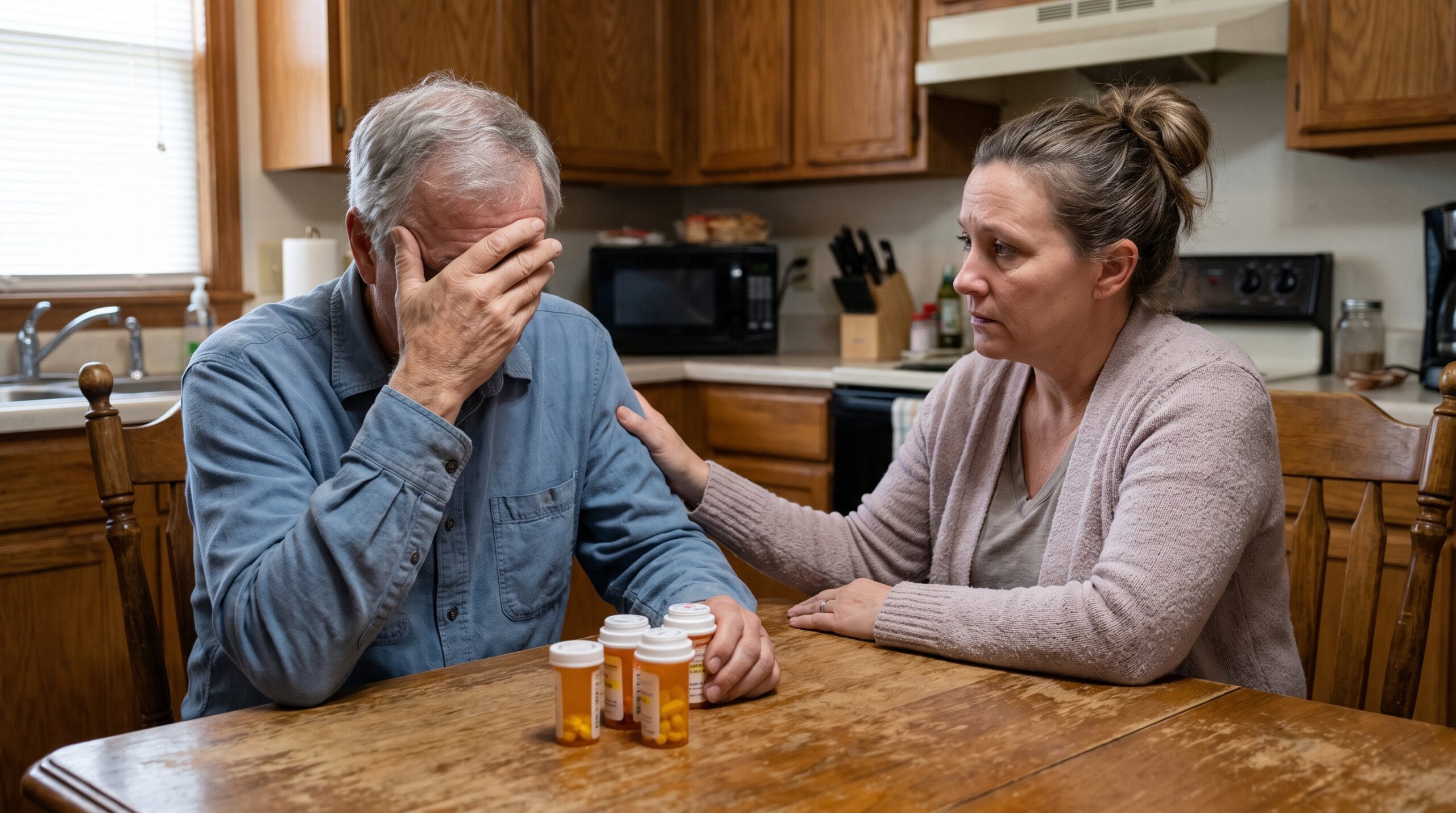
Gabapentin is a prescription anticonvulsant that doctors often use for nerve pain, including CRPS, though CRPS is not one of its FDA-approved uses. It was approved in 1993 and is now available as a generic. Never stop it on your own, because withdrawal symptoms have been observed after discontinuation. Plan any change with your prescriber. (source: the NIH)
If you have CRPS, there’s a good chance gabapentin is already in your pill organizer. Maybe you were glad to get it. Maybe you’ve wondered for a while what it’s actually doing, and whether anyone has looked at the reason you needed it in the first place.
We’re not here to tell you medication is wrong. Medicine can be brilliant, and for many people gabapentin is part of getting through the day. The question is what it can and can’t do.
What is gabapentin, and what are gabapentin pills?
Gabapentin is an anticonvulsant. According to StatPearls, it was approved by the FDA in 1993 and has been available as a generic in the USA since 2004. You may see it under the brand names Neurontin, Gralise or Horizant.
The pills come in several forms. Cleveland Clinic lists gelatin capsules, tablets and an oral solution, so what’s in your bottle depends on what your prescriber chose.
The FDA-approved uses are narrower than what you may have been told. StatPearls says gabapentin "is indicated for postherpetic neuralgia and serves as adjunctive therapy for managing partial seizures." CRPS isn’t on that list. That makes its use for CRPS off-label, which is common and legal, but it helps to know that’s where you stand.
Why is gabapentin so common in CRPS and nerve pain?
It’s common because nerve pain is hard to treat and gabapentin is one of the standard first options. StatPearls reports that the Canadian Pain Society, the National Institute for Health and Care Excellence, and the Neuropathic Pain Special Interest Group recommend it as one of the initial treatment options for neuropathic pain.
CRPS is a nerve pain condition, so it makes sense that doctors reach for it. UCSF’s pain education program notes that in animal models, gabapentin prevents allodynia and hyperalgesia, two features many people with CRPS know well.
That’s the honest case for it. It’s a reasonable tool.
What are the side effects and risks you should know about?
The common ones are dizziness, sleepiness and swelling in the legs. UCSF lists "dizziness, somnolence, and peripheral edema" among them.
There are more serious cautions too. The FDA label warns that respiratory depression "may occur with NEURONTIN when used with concomitant central nervous system (CNS) depressants, including opioids, or in the setting of underlying respiratory impairment." It also notes that withdrawal symptoms or suicidal behavior and ideation have been observed after discontinuation.
MedlinePlus adds that about 1 in 500 people who took anticonvulsants such as gabapentin in clinical studies became suicidal during treatment. If you notice a change in your mood, call your prescriber. If you’re ever in crisis, call 988 in the US.
The label also covers dosing for postherpetic neuralgia, the shingles-related nerve pain gabapentin is approved for. In those clinical studies, "the additional benefit of using doses greater than 1800 mg/day was not demonstrated." That finding comes from postherpetic neuralgia trials, not from CRPS, so it can’t tell you the right dose for your condition. If you’ve been told to keep going up, ask your prescriber about it.
| What to know | What the sources say |
|---|---|
| FDA-approved uses | Postherpetic neuralgia and partial seizures (StatPearls) |
| Common side effects | Dizziness, somnolence, peripheral edema (UCSF) |
| Combined with opioids or other CNS depressants | Risk of respiratory depression (FDA label) |
| Stopping | Withdrawal symptoms have been observed after discontinuation (FDA label) |
None of this means gabapentin is bad. It means it deserves the same respect as any medication that acts on your nervous system.
What should you do about gabapentin if you’re thinking about our program?
Start by taking it exactly as prescribed. Gabapentin is a medication you and your prescriber manage together, and we can’t change it for you.
If you’re considering The Spero Clinic, tell us everything you take when you call. We’ll talk it through with you, and any change to your dose is a plan your prescriber builds around your dose, your other medications and how you’re doing.
Do not stop gabapentin on your own. The label describes withdrawal symptoms after discontinuation. We work alongside your prescriber and we don’t replace them.
We also understand how scary a change can sound. If gabapentin is the thing that gets you through the night, the idea of coming off it can feel like being asked to give up your one handhold. You get to ask hard questions about that, and we would rather you ask them than quietly worry.
Why can medication feel like a bandage?
Medication can feel like a bandage because it often works on the symptom you feel, and the symptom is rarely the whole story. A bandage is useful. You wouldn’t skip one on a cut. But it doesn’t tell you why the cut keeps reopening.
In CRPS, the pain you feel is one signal from a nervous system that has lost its balance. That includes the central nervous system and the autonomic nervous system, which handles things like temperature, blood flow and heart rate. When those systems are dysregulated, pain can be one symptom among many, alongside swelling, skin changes, sleep trouble and fatigue.
So a medicine that quiets one signal may help you function while the pattern behind it stays where it was. You can read more about the condition itself in Everything to Know About Complex Regional Pain Syndrome (CRPS).
What does The Spero Clinic do for CRPS?
We treat the nervous system, not just the symptom. The Spero Clinic is an intensive, in-person neurologic rehabilitation program in Fayetteville, Arkansas. It’s designed to restore balance and function across the central and autonomic nervous system, with an individualized plan and a team that knows you by name.
We don’t promise a specific outcome, and no responsible clinician can. We also don’t claim this is your only hope, because many people find healing in their own way. What we offer is a different clinical framework for complex cases, and the time meaningful change can require. For more detail, see How The Spero Clinic Treats CRPS.
What does treating the body from the inside out mean?
It means we look at the whole person and the systems that regulate them, not just the sore limb. Your pain, sleep, digestion, energy and mood are connected through the same nervous system, so we assess them together.
That’s the idea behind our broader approach to healing neurological dysfunction. It also explains why our care for chronic pain conditions looks different from a pain clinic visit built around a prescription pad.
| Medication alone | Whole-person nervous system care | |
|---|---|---|
| Main target | A symptom, such as nerve pain | Regulation across the central and autonomic nervous system |
| Typical role | Eases how you feel day to day | Aims to improve how the system functions |
| Time frame | Ongoing, adjusted by your prescriber | Intensive and in person, with the time change may need |
| Promise | Varies by drug | No guaranteed outcome |
The two aren’t enemies. Many people need medicine at some point. The difference is what each one is trying to do.
Common mistakes with gabapentin and CRPS
The biggest one is stopping suddenly because you’ve read something frightening or because you feel better. Please don’t. Withdrawal is documented on the label, and a gradual plan with your prescriber is the safe route.
The second is mixing gabapentin with sedating medicines without telling anyone. The FDA label warns about respiratory depression with opioids and other CNS depressants, so every prescriber and your pharmacist should see your full list.
The third is assuming a higher dose always means more relief. In postherpetic neuralgia studies, the label says benefit above 1800 mg a day wasn’t demonstrated. That isn’t a CRPS finding, but it’s a fair reason to ask your prescriber whether a bigger dose is really helping you.
The last is feeling guilty. Needing medication doesn’t mean you failed anything. Needing more than a medication doesn’t either.
FAQ
Can gabapentin be used to treat neuropathic pain?
Yes. StatPearls reports that major pain bodies recommend it as one of the initial options for neuropathic pain. It’s FDA-approved for postherpetic neuralgia specifically, so use for other nerve pain, including CRPS, is off-label.
Can you take gabapentin and buspirone together?
Only your prescriber or pharmacist can answer that for your situation. Our sources don’t address this pairing. The FDA label does warn about added effects when gabapentin is combined with other CNS depressants, so share your full medication list with both.
Can gabapentin cause constipation?
Yes, it can. MedlinePlus lists constipation among gabapentin’s side effects. If you notice it, tell your prescriber rather than stopping the medication.
What are gabapentin pills?
They’re the tablet and capsule forms of an anticonvulsant used for certain seizures and for nerve pain. Cleveland Clinic notes gabapentin also comes as an oral solution. Brand names include Neurontin, Gralise and Horizant.
What to do next
Write down every medication you take, with the dose and the time of day, then bring that list to your next prescriber visit. Hope is still within your reach, even when years of fragmented care have taught you to doubt it. When you’re ready, schedule a free discovery call and tell us what you’re taking now, and we’ll be honest about fit, time, travel and what we can’t promise.
This article is general education, not medical advice. Please talk with your own prescriber before changing any medication.


